


Sea Fishing

What is it?

What to do Next?

Activity Types

Just like we are all different, so are the opportunities available to us as unique individuals. Deciding what you prefer based on your skills and preferences is an exciting journey.
Keep searching below to find out more.

Love the game, but interested in investigating other pathways, opportunities or ways of getting involved. Keep exploring...

Simply Snapfacts

Why are coarse fish usually returned to the water after capture?
Many coarse fishing competitions use catch-and-release rules to protect fish populations.
Coarse Fishing
0
Why do people discover unusual objects while magnet fishing?
Powerful magnets can pull metal items like bicycles, safes, and historical artefacts from rivers.
Magnet Fishing
0
Why do fly fishers cast lightweight artificial flies instead of heavy bait?
Fly fishing imitates insects landing naturally on the water surface.
Fly Fishing
0
Why can sea fishing conditions change rapidly?
Tides, currents, weather, and waves constantly affect fish movement and safety at sea.
Sea Fishing
0
Why do freshwater fish react differently in cold water?
Fish become slower and less active as water temperatures drop.
Freshwater Fishing
0

Membership Required

You must be a member to access this content.

View Membership Levels

Already a member? Log in here

SIMPLY FACTS

Simply History

Recreational angling became widely organised in Britain during the 1800s, with clubs, rules and fishing publications growing in popularity.
Fly Fishing has written references from at least the 2nd century, with later British traditions shaping modern artificial fly techniques.
Recreational angling became widely organised in Britain during the 1800s, with clubs, rules and fishing publications growing in popularity.
Magnet Fishing became popular in the 2000s and 2010s as powerful neodymium magnets became widely available to hobbyists.
Recreational angling became widely organised in Britain during the 1800s, with clubs, rules and fishing publications growing in popularity.


Simply Comparisons

What is it all about?

Boat Fishing
Anglers fish from boats, exploring deeper waters and learning safety, patience and technique.
Coarse Fishing
Anglers catch freshwater fish like carp or roach, often returning them safely after capture.
Fly Fishing
Anglers use artificial flies and careful casting to catch fish in rivers, lakes or streams.
Freshwater Fishing
Freshwater Fishing is a form of fishing that helps people practise the key skills of the activity in a fun, focused and active way.
Magnet Fishing
People use strong magnets to find metal objects underwater, combining curiosity, safety and discovery.
Sea Fishing
Anglers fish from beaches, piers or boats, targeting species found in coastal waters.

Olympic Status

Boat Fishing
Non-Olympic
Coarse Fishing
Non-Olympic
Fly Fishing
Non-Olympic
Freshwater Fishing
Non-Olympic
Magnet Fishing
Non-Olympic
Sea Fishing
Non-Olympic

Starting Age

Boat Fishing
All ages
Coarse Fishing
All ages
Fly Fishing
8+ Years
Freshwater Fishing
All ages
Magnet Fishing
8+ Years
Sea Fishing
All ages

Players

Boat Fishing
1 or more
Coarse Fishing
1 or more
Fly Fishing
1 or more
Freshwater Fishing
1 or more
Magnet Fishing
1 or more
Sea Fishing
1 or more

Length of Play

Boat Fishing
1–6+ hours
Coarse Fishing
1–6+ hours
Fly Fishing
1–6+ hours
Freshwater Fishing
1–6+ hours
Magnet Fishing
1–6+ hours
Sea Fishing
1–6+ hours

Simply Try

Let the Journey Begin

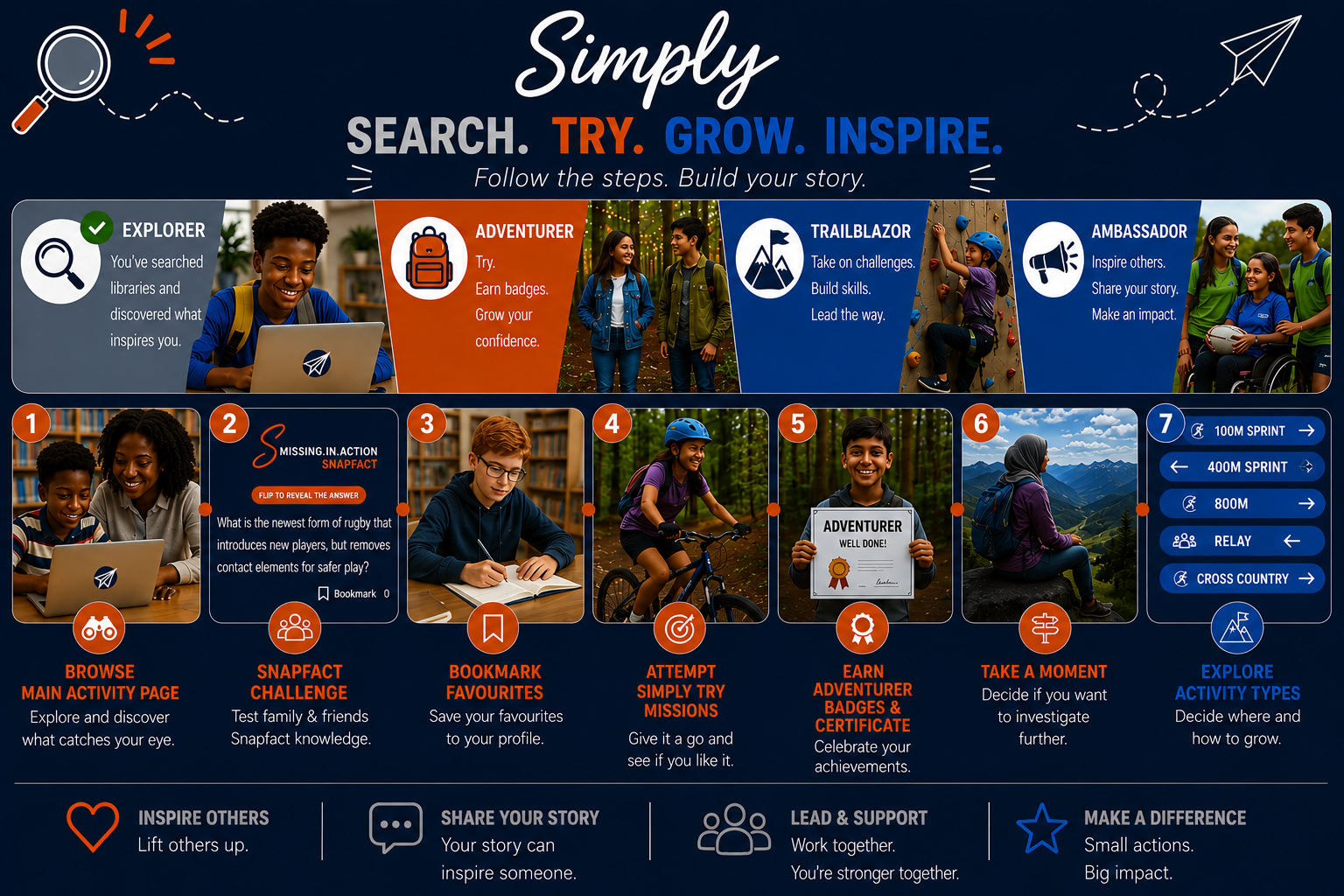
The Discovery Missions are designed to introduce the sport, in a fun and inclusive way.

  1. Read the Discovery Mission and learn what you’ll be doing.
  2. Complete the Mission friend, family member, trusted adult or just you,and have fun!
  3. If you wish to, Record and reflect on your experience by writing in your Personal Journal.
  4. Earn an Adventurer Badge for each completed Discovery Mission.
  5. Unlock your Adventurer Certificate when you have completed 4 of your chosen Discovery Missions.

Search for a Local Club

Explore Activity Types

After exploring this page below, and discovering all about the activity, and deciding that you wish to learn more, progress as a Trailblazor by exploring the Activity types to decide which one interests you.
On Activity Type Pages, you will have the opportunity to attempt Simply Grow Missions to develop your skills, and decide if you wish to challenge yourself with Simply Inspire Missions to progress as an Activity Ambassador.

Sea Fishing

Magnet Fishing

Coarse Fishing

Freshwater Fishing

Boat Fishing

Fly Fishing

Browse Equipment

Browse Pre-Loved

Pre-loved shopping is a smart and sustainable way to find quality items at great value. From sports equipment and books to games, hobbies and everyday essentials, many pre-loved items have been carefully looked after and are ready for their next adventure. Browse trusted brands, discover hidden gems and find products that have already stood the test of time.

Browse New

Spending money is an important decision, so it’s worth exploring your options before you buy. Browse a variety of stores to compare products, prices and services, helping you find the right item at the right value. Whether you’re looking for sports equipment, books, games or hobby supplies, take the time to shop around and make an informed choice.

Simply Tip: Create a wishlist for birthdays, save or earn pocket money by doing chores.

Test your friends & family's knowledge by flipping Simply Snapfacts
Inspire-Me Galleries Challenge-Me Galleries |

Where did Curling develop?
Curling developed in Scotland in the 1500s, where players slid stones across frozen lochs and ponds.
Traditional Curling
0
Where did Shot Put develop from?
Shot Put developed from stone-throwing strength contests in Scotland and became a modern athletics event.
Shot Put
0

Keep up with the conversations that highlight useful content on the site, ideas and new ideas.

Have Fun

Accept
Scroll to Top