

Junior Football: 9-a-side (U11-U12)
What is it?
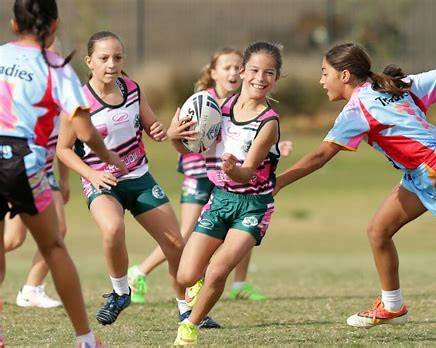
Mini football is an introductory version of football designed to help younger players build confidence, develop core skills, and enjoy the game in a fun and manageable environment. Played with smaller teams, smaller pitches, and age-appropriate rules, mini football gives players more touches of the ball, more chances to pass, defend, move, and score, helping them learn the fundamentals of the game while staying actively involved. The format focuses on enjoyment, teamwork, coordination, and developing a love for football from an early age.
Different players in mini football begin to explore attacking and defensive responsibilities, learning how to support teammates, create space, protect possession, and work together as a team. With fewer players on the pitch, every child has more opportunities to be involved in the action, helping them build confidence, improve decision-making, and develop technical skills such as passing, dribbling, control, and shooting. The game encourages learning through play, communication, and active participation.
Mini football is widely played in schools, clubs, and community programmes, creating a welcoming pathway into one of the world’s most loved team sports. Designed to match the age and stage of young players, it helps children build fitness, resilience, confidence, and teamwork while developing the foundations needed to progress into larger formats of the game. Mini football makes football accessible, enjoyable, and exciting for the next generation of players.

Explore Activity Types
After exploring this page below, and discovering all about the activity, and deciding that you wish to learn more, progress as a Trailblazor by exploring the Activity types to decide which one interests you.
On Activity Type Pages, you will have the opportunity to attempt Simply Grow Missions to develop your skills, and decide if you wish to challenge yourself with Simply Inspire Missions to progress as an Activity Ambassador.
Mini Football: 7-a-side (U9-U10)
Mini football (7-a-side) is a progression of early football designed to help younger players build confidence, strengthen core skills, and develop a deeper understanding of the game in a fun and manageable environment. Played with seven players on each team, larger pitches than 5-a-side, and age-appropriate rules, the format gives players more opportunities to pass, defend, move, create space, and score goals while introducing greater teamwork and game awareness. The format focuses on skill development, communication, decision-making, and building a love for football as players grow.
Different players in 7-a-side mini football begin to take on more responsibility in both attacking and defending, learning how to support teammates, protect possession, create opportunities, and understand positional play. With more players on the pitch and larger spaces to cover, passing, movement, teamwork, and communication become even more important, helping players improve technical skills such as dribbling, control, shooting, and game awareness while remaining actively involved in the action.
Mini football is widely played in schools, clubs, and community programmes, creating an important stepping stone in a young player’s football journey. Designed to match the age and stage of developing players, 7-a-side football helps children build fitness, resilience, teamwork, confidence, and tactical understanding while preparing them for larger football formats. Mini football makes progression exciting, enjoyable, and accessible while helping young players continue to grow their love for the game.
Powerchair Football
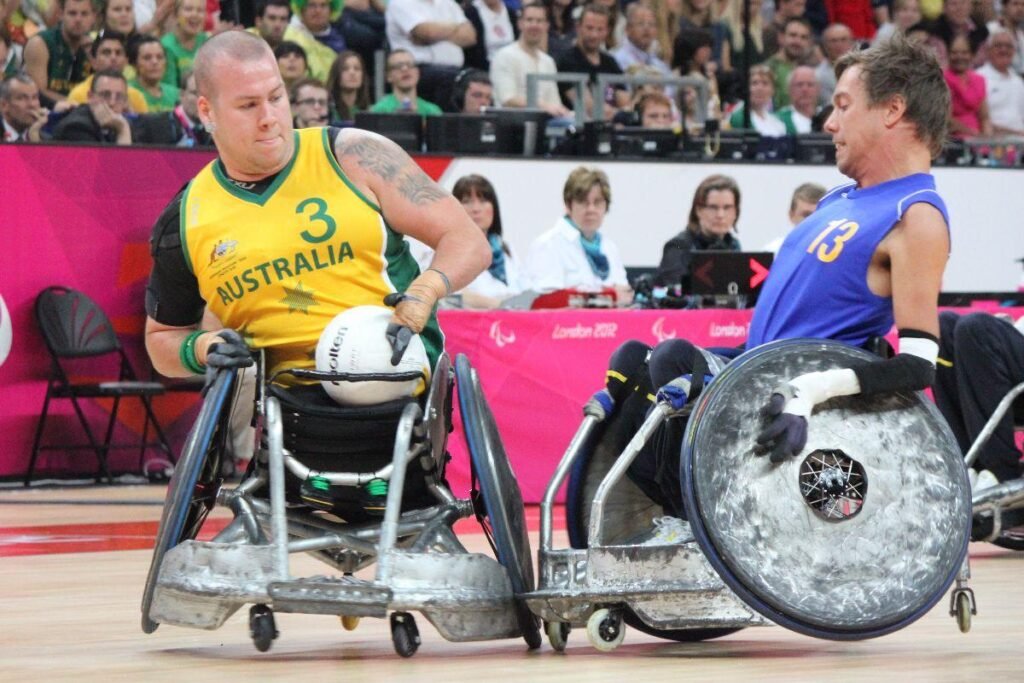
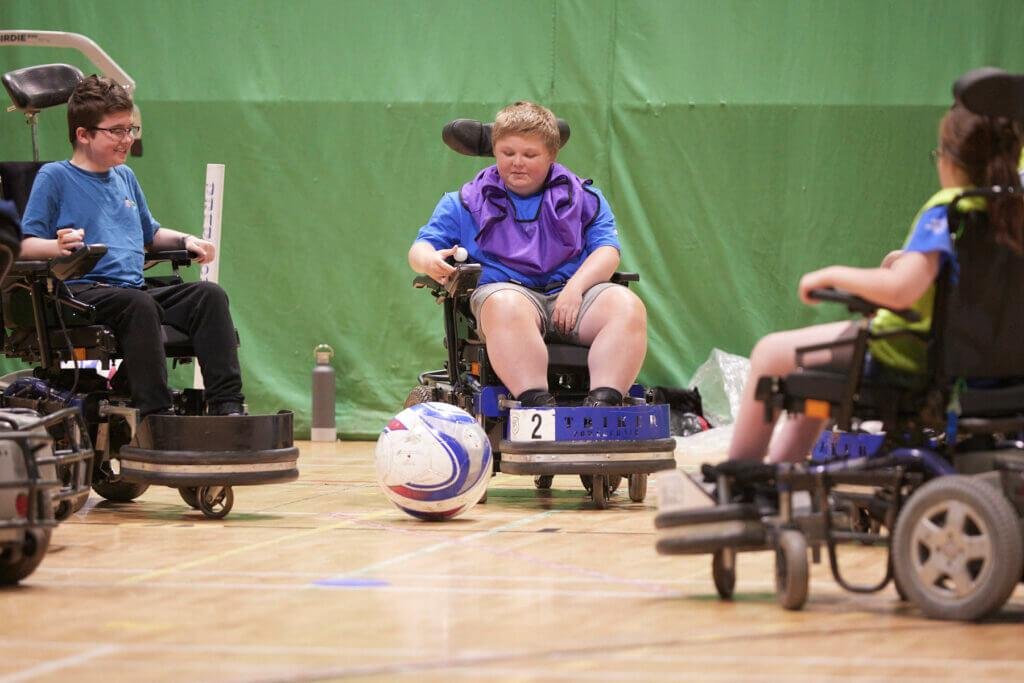
Powerchair Football is a highly skilled and intensely strategic version of football where players compete using specially designed powered wheelchairs to control, pass, defend, and score goals. Fast reactions, precise control, teamwork, and sharp decision-making are essential, as players manoeuvre quickly around the court while working together to build attacks and protect their goal. The game combines technical ability, tactical awareness, and competitive teamwork, creating a thrilling version of football that demands concentration, coordination, and confidence at every moment.
Different players in Powerchair Football take on important attacking and defensive roles throughout the game. Some focus on controlling possession, creating passing opportunities, and driving attacking play forward, while others use positioning, anticipation, defensive awareness, and expertly timed challenges to stop opponents and regain control. Because movement, timing, and precision are so important, the game requires constant communication, rapid thinking, and exceptional teamwork, with success often coming from accuracy, tactical discipline, and reading the game under pressure.
Powerchair Football is one of the most technically demanding and inclusive forms of football, creating exciting opportunities for players with physical disabilities to compete at a high level in a fast-paced team sport. Played in clubs, leagues, and international competitions around the world, it celebrates determination, skill, sportsmanship, and the powerful community spirit that makes football such a global game. Powerchair Football proves that challenge, competition, teamwork, and ambition are at the heart of football in every form.
Indoor Football
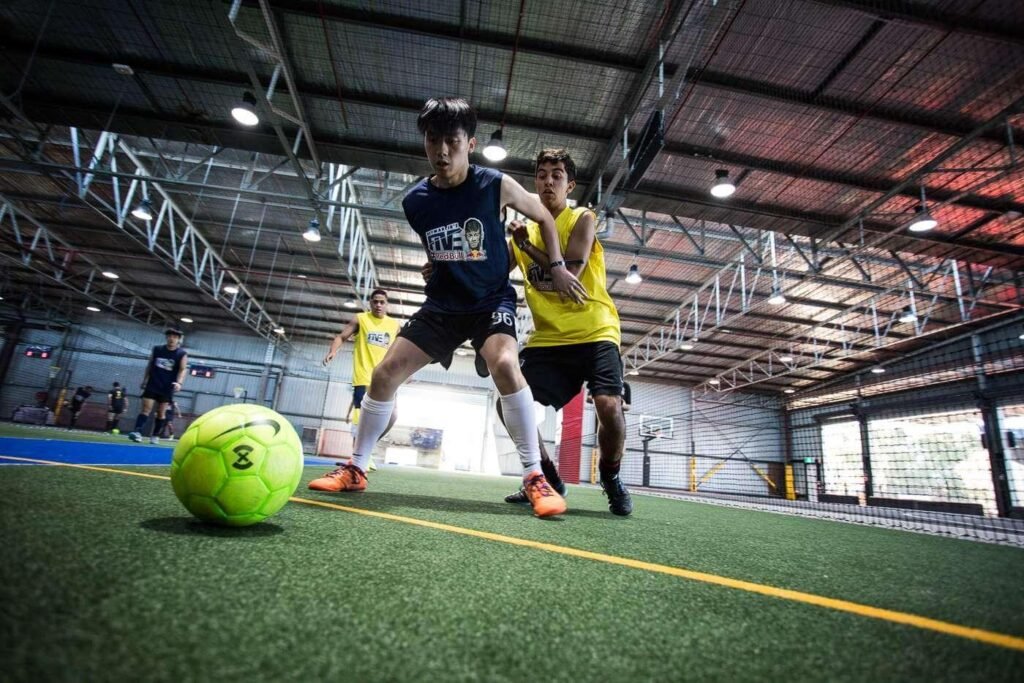
Indoor football is a fast-moving version of football played in enclosed indoor arenas, where smaller teams compete in a high-energy game that emphasises quick passing, movement, teamwork, and rapid decision-making. With a more compact playing space and often rebound walls keeping the ball in play, the action rarely stops, creating an exciting format where players are constantly involved in attack and defence. The game rewards agility, awareness, ball control, and fast reactions, making it an engaging and action-packed way to experience football.
Different players in indoor football contribute across both attacking and defensive phases, with the pace of the game often requiring players to transition quickly between roles. Some focus on creating chances, controlling possession, and finishing opportunities, while others work to intercept passes, close down space, and support teammates under pressure. Because the ball remains in play more often and the game moves quickly, communication, teamwork, technical skill, and smart movement are essential for success.
Indoor football is widely enjoyed in schools, clubs, leisure centres, and competitive leagues, offering players a dynamic and accessible way to enjoy the sport throughout the year. Its smaller-sided structure helps players build confidence, improve technical ability, develop fitness, and stay actively involved throughout the match. Indoor football brings speed, excitement, and teamwork together in a format that keeps the spirit of football alive in a unique indoor environment.
Junior Football: 9-a-side (U11-U12)
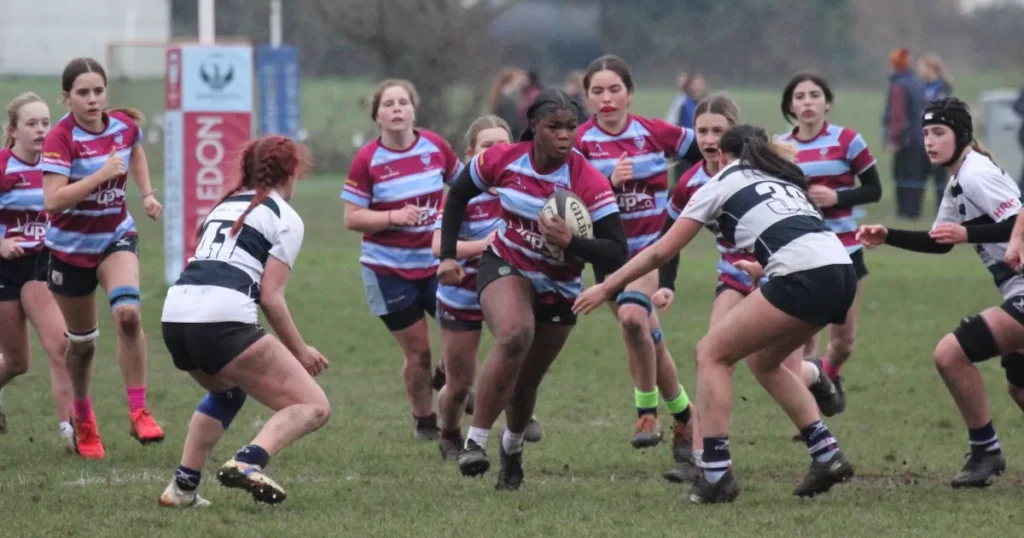
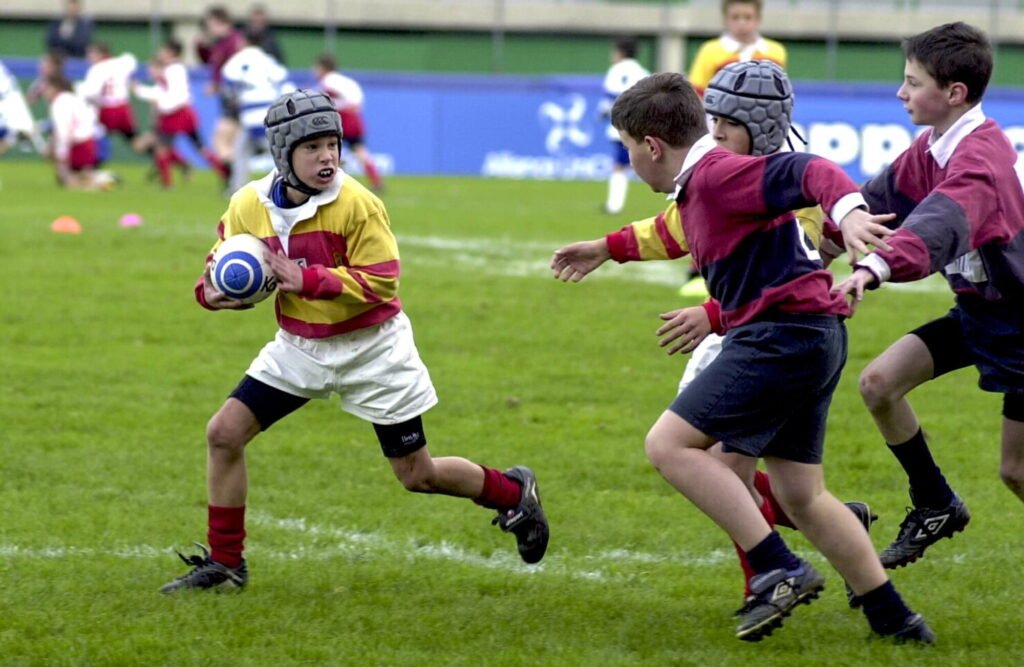
Junior football is a progression from mini football, designed to help players build on the skills and confidence they have already developed while preparing for the transition into full 11-a-side football. Played with larger teams, bigger pitches, and more advanced gameplay, 9-a-side football introduces players to greater tactical awareness, positional understanding, and teamwork while still keeping the game age-appropriate and enjoyable. The format helps players take the next step in their football journey by combining skill development with a deeper understanding of how the game is played.
Different players in junior football begin to take on more defined attacking and defensive responsibilities, learning how to work within positions, create space, support teammates, protect possession, and make smarter decisions both on and off the ball. With more players on the pitch and larger areas to cover, communication, movement, passing, positioning, and game awareness become even more important. The format encourages players to strengthen their technical ability, teamwork, confidence, and tactical thinking as they prepare for larger team football.
Junior football is widely played in schools, clubs, and community programmes, providing an important bridge between smaller-sided football and the traditional full game. Designed for players ready for greater challenge and progression, it helps children improve fitness, resilience, teamwork, and match understanding while continuing to enjoy the excitement of football in an age-appropriate format. Junior football creates a strong pathway for players preparing to progress into 11-a-side football and beyond.
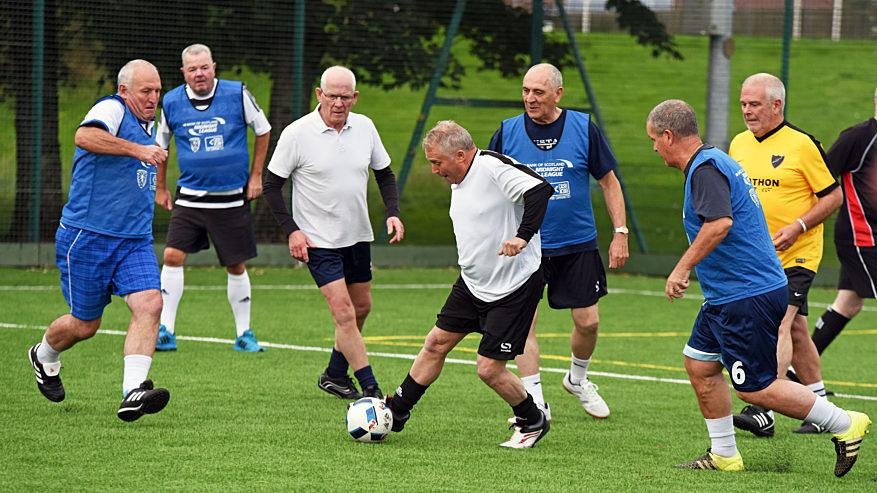
Walking Football
Walking Football is a modified version of football where running is not allowed, creating a slower-paced and more accessible way to enjoy the game while still focusing on teamwork, passing, movement, and scoring goals. Players work together to build attacks, defend their goal, and keep possession using control, positioning, communication, and smart decision-making rather than speed or physical intensity. The game keeps the core spirit of football while making it easier for a wider range of players to take part and enjoy the sport.
Different players in Walking Football contribute in different ways during attack and defence. Some focus on creating passing opportunities, supporting teammates, and controlling the tempo of the game, while others use awareness, accurate passing, positioning, and anticipation to help their team move forward and create chances. Because players must walk at all times, the game encourages thoughtful play, teamwork, patience, and quick thinking, with success often coming from clever movement and strong communication rather than pace alone.
Walking Football was created to make football more inclusive and accessible, particularly for older players, those returning to the game, or anyone looking for a lower-impact way to stay active and connected through sport. Played in clubs, community groups, and organised competitions around the world, it promotes fitness, confidence, social connection, and enjoyment in a welcoming team environment. Walking Football shows that the excitement, teamwork, and community spirit of football can be enjoyed at many different ages and abilities.
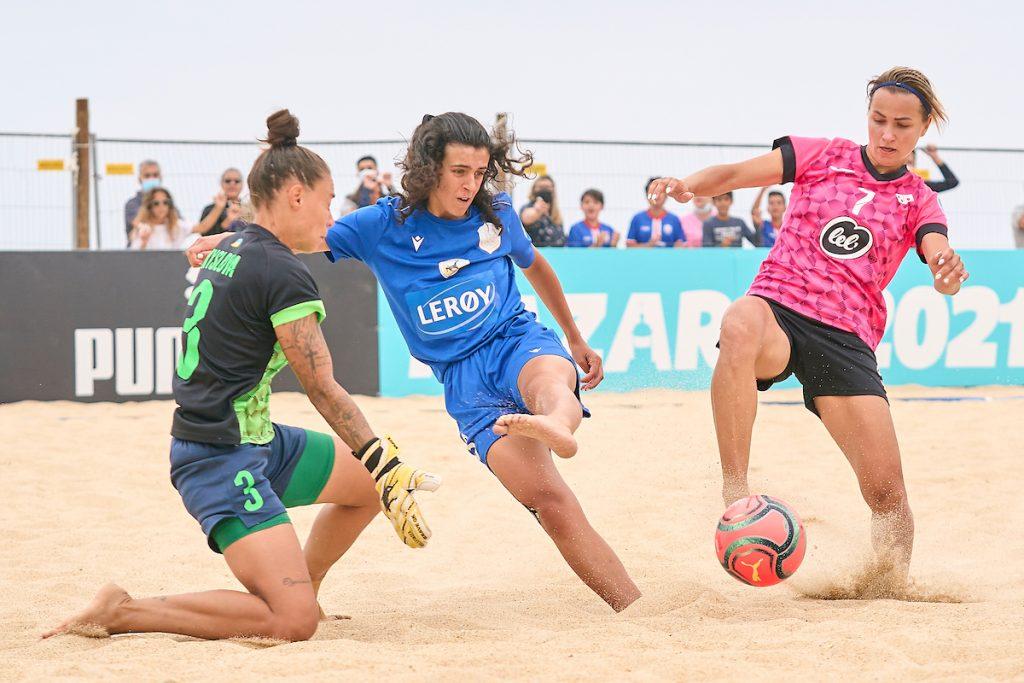
Beach Football
Beach football, often known as beach soccer, is a dynamic version of football played on sand, where players compete in a fast-moving game that demands agility, balance, quick reactions, and exceptional ball control. The softer, shifting surface creates a completely different challenge from traditional football, making movement, passing, shooting, and defending far more physically demanding. Players must adapt their skills, timing, and teamwork to a unique environment where creativity, flair, and determination are constantly tested.
Different players in beach football contribute across both attack and defence, often switching roles quickly as the game flows from end to end. Some focus on creating scoring opportunities with clever movement, acrobatic finishing, and accurate passing, while others work to defend space, intercept attacks, and support teammates under pressure. Because the sand changes every movement and slows momentum, players rely heavily on coordination, communication, quick thinking, and technical skill to stay competitive throughout the match.
Beach football brings a vibrant and exciting twist to the world’s most popular sport, combining athleticism, teamwork, and creativity in a challenging outdoor environment. Played recreationally and competitively around the world, it offers players a fantastic way to build fitness, confidence, resilience, and football skills while enjoying the energy and freedom of playing by the sea. Beach football proves that football can be experienced in many thrilling ways while keeping the spirit of teamwork and fun at its heart.
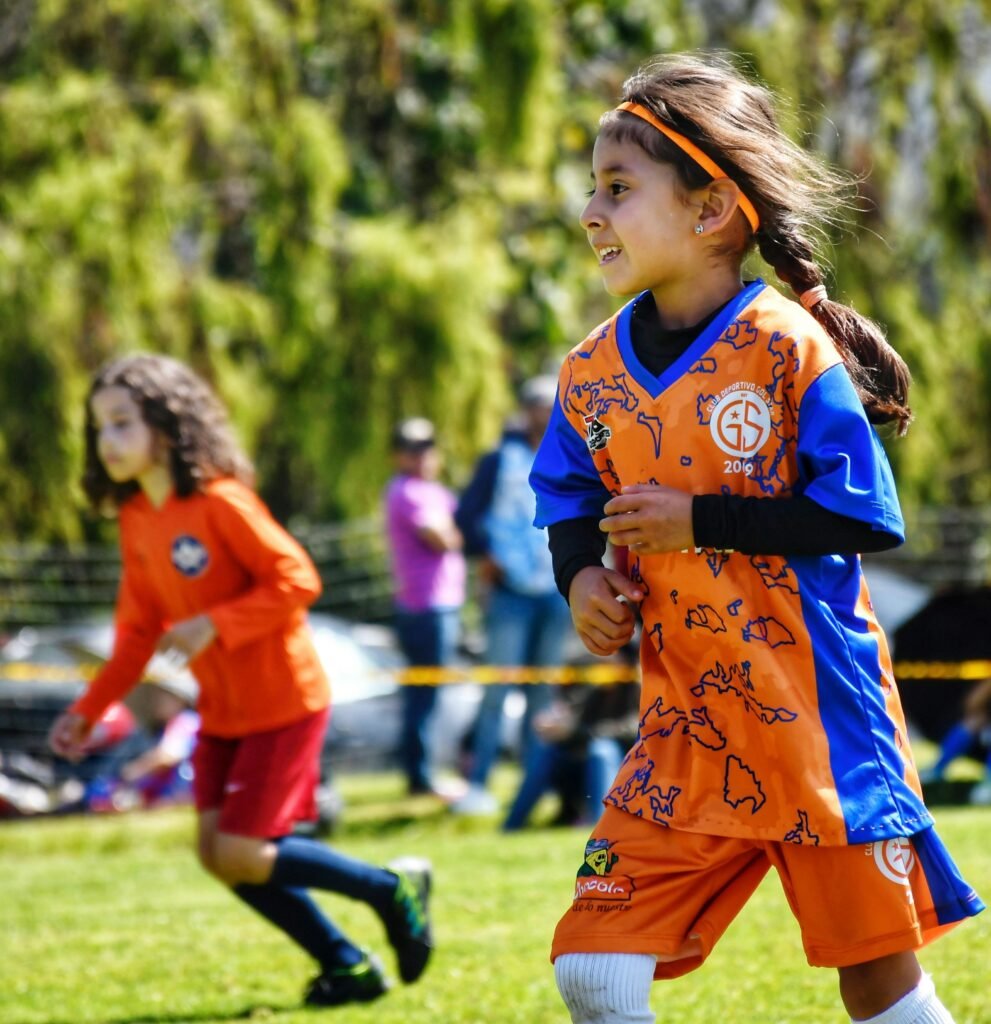
5-a-side Football
5-a-side football is a fast-paced version of football played with smaller teams on a more compact pitch, creating a game that is full of quick movement, sharp passing, and constant involvement. With fewer players and less space, the action moves rapidly, requiring players to think quickly, react under pressure, and work closely together to create chances and defend effectively. The game places a strong focus on ball control, teamwork, movement, and quick decision-making, making it an energetic and highly engaging version of football.
Different players in 5-a-side football contribute across both attack and defence, with many players regularly switching roles throughout the game. Some focus on driving forward, creating opportunities, and finishing chances, while others concentrate on defending space, intercepting passes, supporting teammates, and helping maintain possession. Because the game moves so quickly and space is limited, communication, awareness, agility, and precise passing are essential, with success often coming from teamwork, quick combinations, and smart movement off the ball.
5-a-side football is widely played in schools, clubs, indoor centres, and community leagues, making it one of the most accessible and popular ways to enjoy football. Its smaller format allows players to develop confidence, improve technical skills, build fitness, and stay actively involved throughout the match. Whether played recreationally or competitively, 5-a-side football offers an exciting, social, and action-packed way to experience the game.
11-a-side Football
11-a-side football is the full version of the game played by two larger teams competing across a full-sized pitch, where players work together to attack, defend, create chances, and score goals. With more players, greater space, and a wider range of tactical roles, teamwork, communication, positioning, and game awareness become essential throughout the match. The game combines technical skill, physical endurance, strategy, and teamwork, creating one of the world’s most recognised and competitive team sports.
Different players in 11-a-side football take on specialist roles across attack and defence, each contributing in unique ways to the team’s success. Some players focus on controlling possession, creating attacking opportunities, and scoring goals, while others concentrate on defending space, breaking up attacks, supporting teammates, and protecting the goal. Because the game is played across a larger pitch with more players and tactical movement, success depends on strong communication, disciplined positioning, quick decision-making, and the ability to work together under pressure from start to finish.
11-a-side football is the traditional format of the sport played in clubs, schools, leagues, and major international competitions around the world. From local grassroots teams to the world’s biggest tournaments, it brings together skill, determination, sportsmanship, and teamwork in a game loved by millions. 11-a-side football offers players the chance to develop confidence, fitness, resilience, and a deep understanding of one of the most popular team sports on the planet.
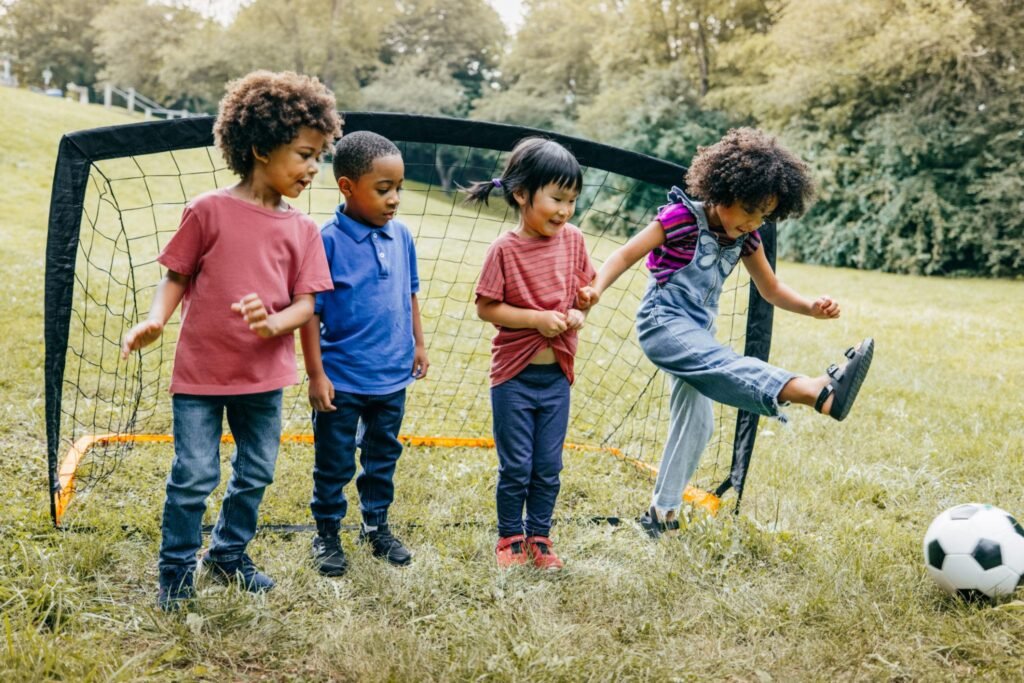
Street Football
Street football is a creative and expressive version of football often played in urban spaces, playgrounds, courts, or smaller outdoor areas where quick reactions, close ball control, flair, and improvisation are at the heart of the game. With tighter spaces and fewer players, the action is intense and unpredictable, encouraging players to think quickly, adapt constantly, and use skill, movement, and creativity to outplay opponents. The game celebrates freedom, confidence, and technical ability, turning everyday spaces into exciting football arenas.
Different players in street football bring their own style to the game, with some using quick footwork, clever dribbling, and sharp passing to unlock defences, while others rely on anticipation, fast reactions, positioning, and determination to win back possession and protect space. Because the game often flows continuously with fewer formal rules, players must communicate, adapt, and make instant decisions, using both teamwork and individual skill to succeed in fast-changing situations.
Street football has inspired players around the world and has played a huge role in developing creativity, confidence, and technical flair in many famous footballers. Played casually in communities, parks, schools, and organised events, it offers an accessible and exciting way to enjoy football while building coordination, resilience, and self-expression. Street football captures the energy, imagination, and pure enjoyment that make football such a loved game across the world.
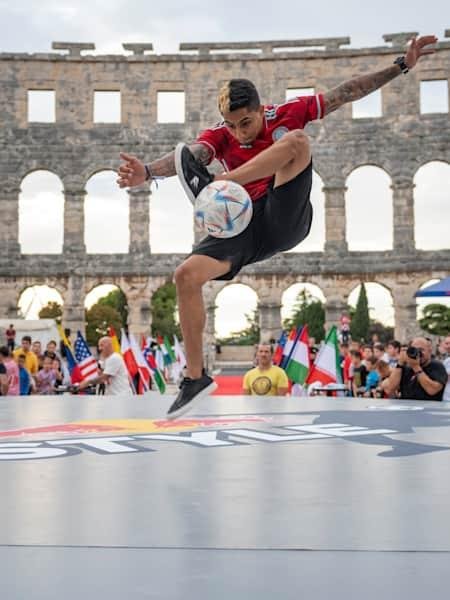
Freestyle Football
Freestyle football is a creative and highly skilled form of football that focuses on ball control, tricks, balance, coordination, and personal expression rather than traditional team matches. Players use different parts of their body, including their feet, knees, chest, shoulders, and head, to perform impressive skills, keep the ball moving, and create eye-catching routines. The sport combines technical precision, creativity, concentration, and practice, turning football into an exciting display of control, rhythm, and individual flair.
Different freestyle footballers develop their own style and specialities, with some focusing on fast footwork, intricate tricks, and close ball control, while others master aerial skills, creative combinations, and complex routines that challenge timing, balance, and coordination. Because the ball is constantly in motion and many tricks require exceptional accuracy, success comes from patience, determination, body control, and countless hours of practice to build confidence and master new skills.
Freestyle football is enjoyed around the world in parks, schools, competitions, and social communities, offering players a unique way to experience football beyond traditional matches. It encourages creativity, perseverance, confidence, and self-expression while helping players develop outstanding technical ability and coordination. Freestyle football shows that football is not only about teamwork and competition, but also about imagination, skill, and pushing the limits of what is possible with a ball.
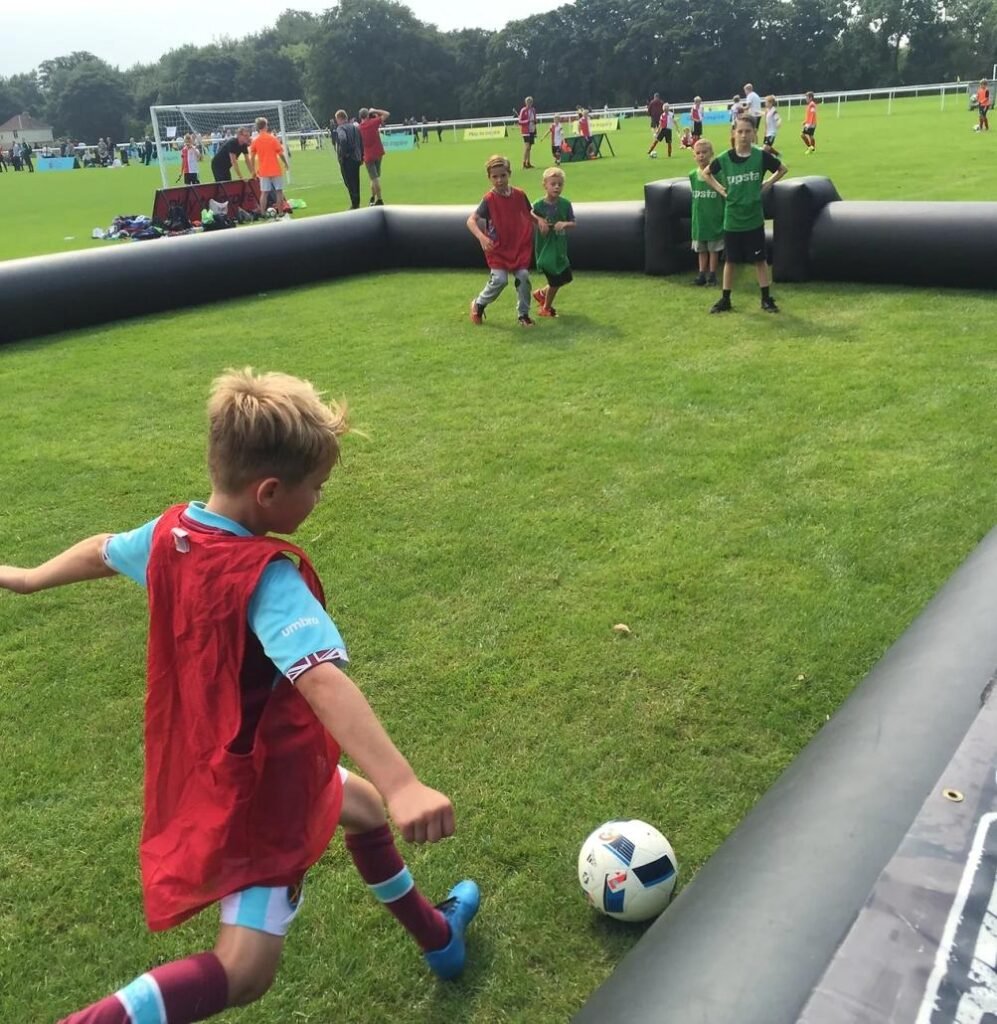
Mini Football: 5-a-side (U7-U8)
Mini football is an introductory version of football designed to help younger players build confidence, develop core skills, and enjoy the game in a fun and manageable environment. Played with smaller teams, smaller pitches, and age-appropriate rules, mini football gives players more touches of the ball, more chances to pass, defend, move, and score, helping them learn the fundamentals of the game while staying actively involved. The format focuses on enjoyment, teamwork, coordination, and developing a love for football from an early age.
Different players in mini football begin to explore attacking and defensive responsibilities, learning how to support teammates, create space, protect possession, and work together as a team. With fewer players on the pitch, every child has more opportunities to be involved in the action, helping them build confidence, improve decision-making, and develop technical skills such as passing, dribbling, control, and shooting. The game encourages learning through play, communication, and active participation.
Mini football is widely played in schools, clubs, and community programmes, creating a welcoming pathway into one of the world’s most loved team sports. Designed to match the age and stage of young players, it helps children build fitness, resilience, confidence, and teamwork while developing the foundations needed to progress into larger formats of the game. Mini football makes football accessible, enjoyable, and exciting for the next generation of players.
Simply Snapfacts
Why are street football skills often creative and unpredictable?
Players adapt tricks and movement to small spaces, walls, and uneven surfaces.
Street Football
0

Why is walking football popular with older adults?
Removing running lowers injury risk while keeping football competitive and social.
Walking Football
0
Why do wheelchair football players protect the front of their chairs?
Special bumpers help control the ball and absorb contact during challenges.
Powerchair Football
0
Why do freestyle footballers practise ball juggling for hours?
Repetition improves touch, control, and creative trick combinations.
Freestyle Football
0
Why do indoor football games restart so quickly?
Smaller courts and rebound walls keep the ball in play more often.
Indoor Football
0
Competitive Formats
Rugby is a diverse and inclusive sport that, the aim is to advance the ball forward, to score a try. Whether you enjoy fast-paced running games, physical challenges, strategic teamwork or adaptive formats, there is a version of rugby to suit different interests, abilities and goals. Each format has its own rules, number of players, playing environment, playing time and, in many cases, its own governing body or competition structure. While every version is unique, all share rugby’s core values of respect, teamwork, confidence and belonging.
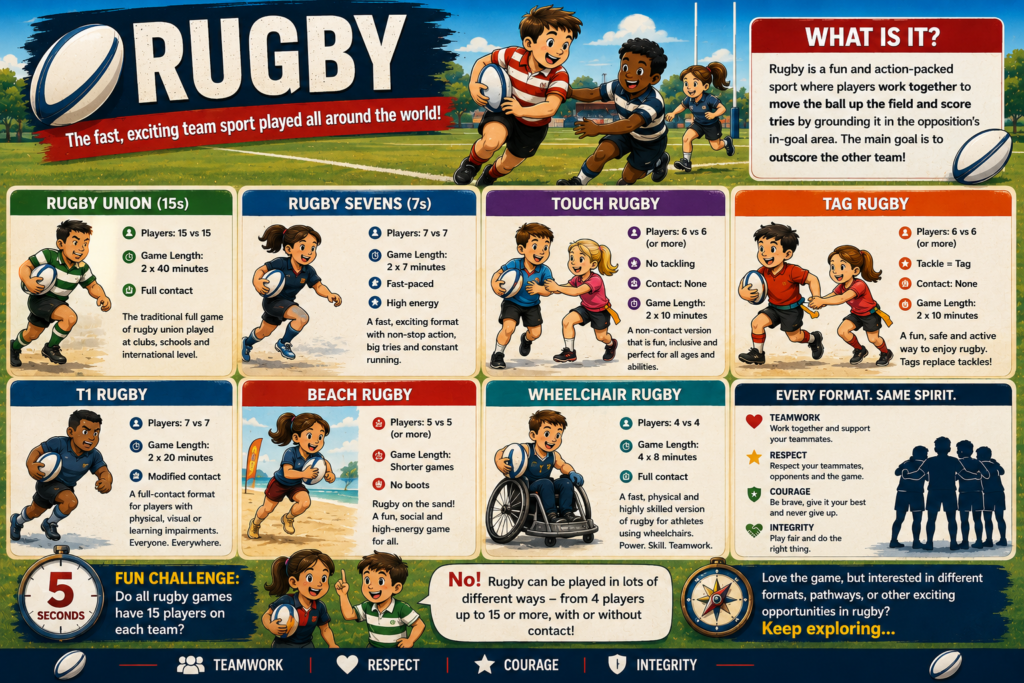
Non-Contact Rugby
Non-contact rugby includes formats where tackling is replaced by touches, tags or other methods of stopping play, making the game more accessible while still retaining many of rugby’s core skills and principles. It focuses on passing, movement, teamwork, decision-making and spatial awareness, often with fewer stoppages and a faster flow of play. Each format has its own rules, number of players, playing time, pace and governing body. Non-contact rugby can also be adapted to support players of different ages, abilities and needs, and always searching for new ways that more people can enjoy and participate in the game.
- Touch Rugby
- Tag Rugby
- T1 Rugby
Contact Rugby
Contact rugby includes formats where touches or tags are replaced with unique elements like scrums, rucks, mauls and line-outs. These elements of the game are introduced after game is stopped by penalty or tackling and physical contact that form part of the game. Games can differ significantly in rules, number of players, playing time, pace, playing environment and governing bodies. Many formats can too feature unique elements such as kicking contests and set pieces, while adaptive formats may modify or replace some of these aspects and can be either contact or non-contact depending on the version being played. Each offers its own challenges, requiring skill, teamwork, determination and resilience.
- Rugby Union
- Wheelchair Rugby
- Rugby League
- Beach Rugby
- Rugby Sevens
Inclusive Rugby
Rugby has continued to develop new formats to engage all individuals, irrespective of ability, experience or circumstances to participate, challenge themselves and enjoy being part of the game. Every individual is encouraged to contribute, support others and recognise the unique strengths that each person brings to the team. By working together, players learn how different skills, perspectives and abilities can unite to achieve a common goal. The games can take on one or a combination of rugby disciplines, based on participants and programme. Whether participating recreationally or competitively, inclusive rugby demonstrates that success is defined by resilience, character, commitment and the willingness to work alongside others. It reflects the spirit of rugby at its best, where everyone has a role to play, every contribution is valued and teams become stronger through collaboration, trust and mutual respect.
- Mixed ability Rugby
- Visually Impaired Rugby
- Walking Rugby
Competitive Pathways
Competitive pathways provide a general guide to some of the adventures and opportunities that may be available as you grow, develop and gain experience. They are designed to show what is possible, not define your pathway.
We all have different goals, and those goals can change over time. You may want to have fun, learn new skills, make friends, stay active, compete, or simply try something new. Different activity formats, countries and governing bodies may offer different pathways and experiences.
Explore the possibilities, discover what you enjoy, and choose the pathway that best supports your own Simply Story.
July 5
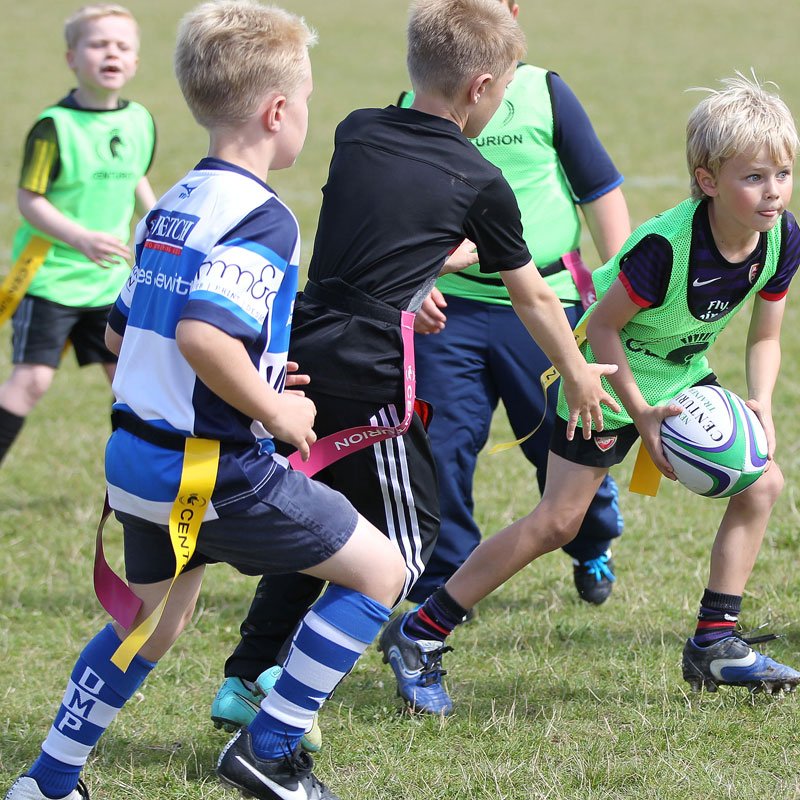
Early Years Foundation
Discover movement, play, coordination and basic skills through fun, age-appropriate activities.
February 2
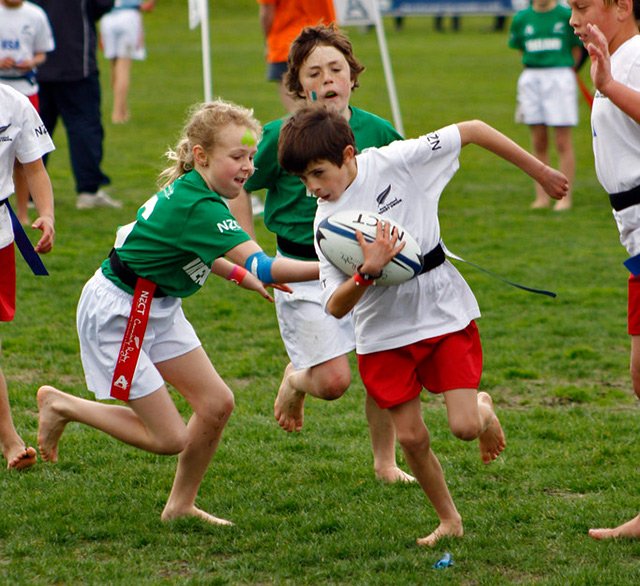
Mini's
Learn the fundamentals, develop confidence and begin playing in simple games and team environments.
January 31
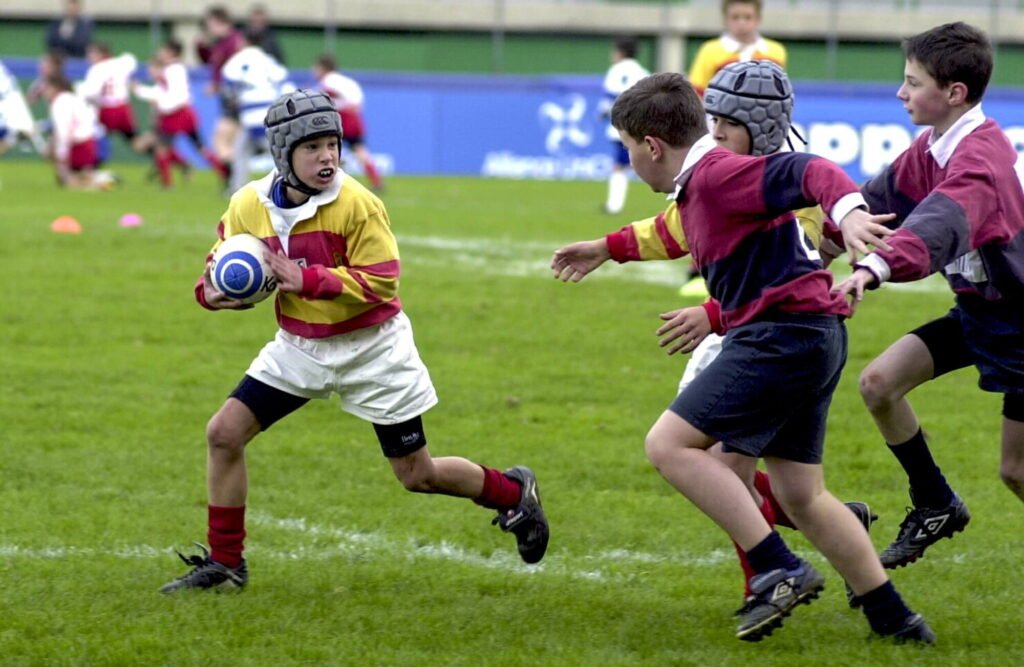
Juniors
Build skills, understanding and experience through regular training, competition and personal development.
January 31
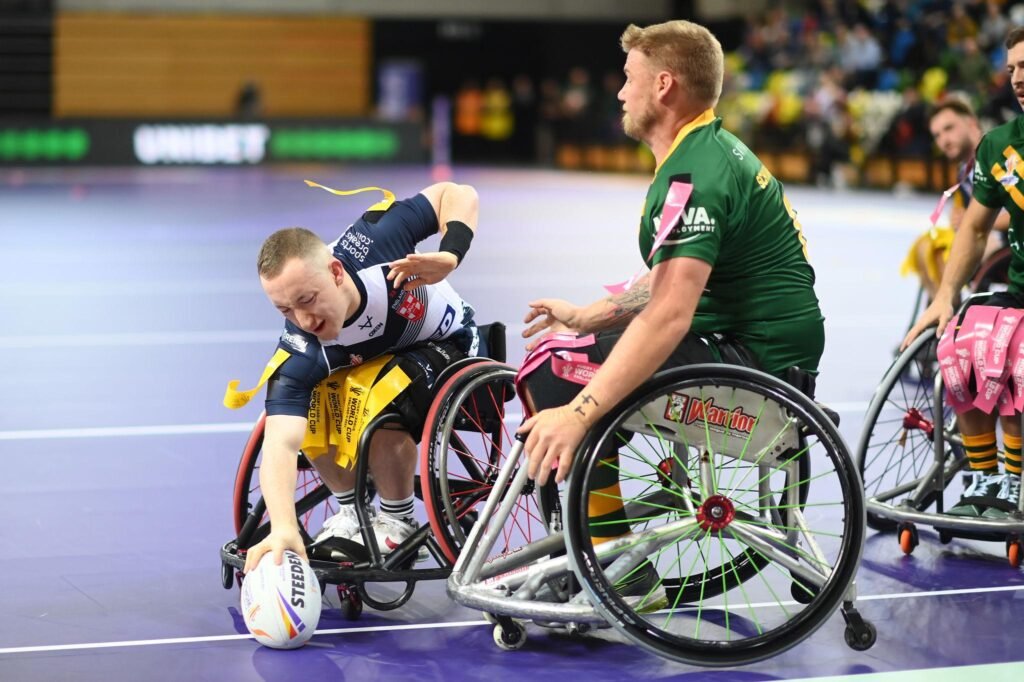
Regional
Represent a wider area, competing against stronger opposition and demonstrating advanced ability and commitment.
January 31
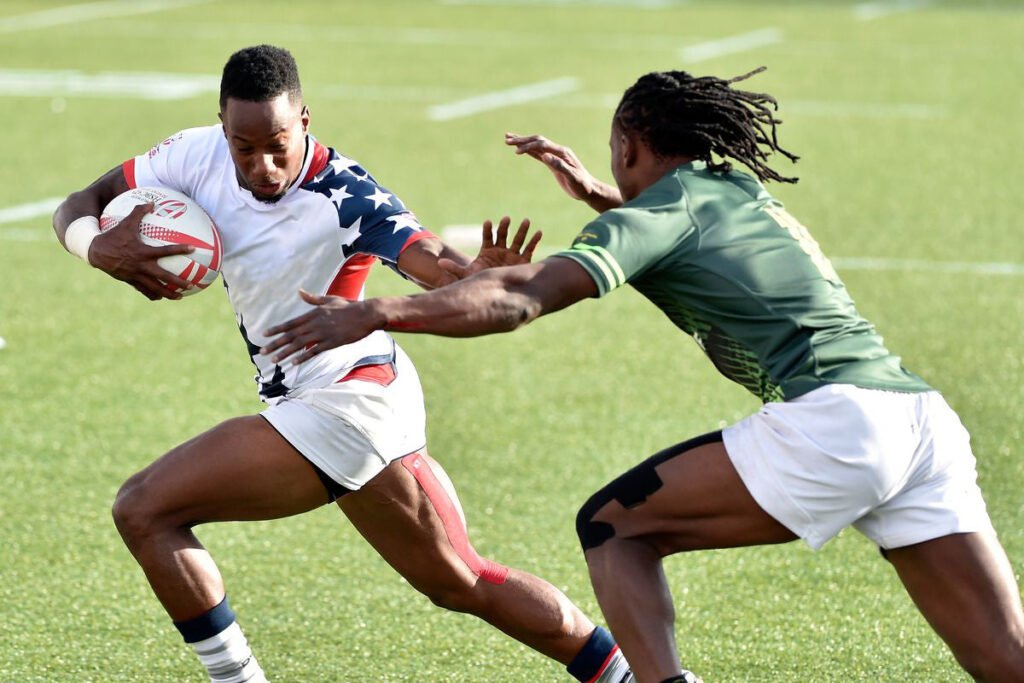
National
Compete or represent at a national level, performing among the highest standard of players in the country.
January 31

Olympics / ParaOlympics
Compete on the world stage, representing your country at elite international competitions, Olympic or Paralympic events.
Search for a Local Club
Simply FACT
Simply History

1871
Rugby Union
Rugby Union was formally organised in 1871 when the Rugby Football Union was founded in England to standardise the rules.
1883
Rugby Sevens
Rugby Sevens was created in Melrose, Scotland, in 1883 by Ned Haig and David Sanderson as a fundraising tournament.
1895
Rugby League
Rugby League was created in 1895 when northern English clubs split from Rugby Union over payments for players who missed work.
1960
Touch Rugby
Touch Rugby developed strongly in Australia in the 1960s and 1970s as a non-contact rugby-style sport.
1977
Wheelchair Rugby
Wheelchair Rugby was originally called Murderball when it was created in Canada in 1977 by athletes with quadriplegia.
2000's
Tag Rugby
Tag Rugby became widely used in schools in the late 20th century as a non-contact way to teach passing, movement and teamwork.
2023
T1 Rugby
T1 Rugby was launched by World Rugby in 2023 as a new non-contact version of rugby designed to make the sport faster, safer, and more accessible for players of all ages and abilities.
Simply Scorecards
Try
Mini Football: 5-a-side (U7-U8)
1
Junior Football: 9-a-side (U11-U12)
1
Mini Football: 7-a-side (U9-U10)
1
Walking Football
Powerchair Football
11-a-side Football
5-a-side Football
Beach Football
Freestyle Football
Futsal
Conversion
Mini Football: 5-a-side (U7-U8)
Junior Football: 9-a-side (U11-U12)
Mini Football: 7-a-side (U9-U10)
Walking Football
Powerchair Football
11-a-side Football
5-a-side Football
Beach Football
Freestyle Football
Futsal
Drop Kick
Mini Football: 5-a-side (U7-U8)
1
Junior Football: 9-a-side (U11-U12)
1
Mini Football: 7-a-side (U9-U10)
1
Walking Football
Powerchair Football
11-a-side Football
5-a-side Football
Beach Football
Freestyle Football
Futsal
Penalty
Mini Football: 5-a-side (U7-U8)
Junior Football: 9-a-side (U11-U12)
Mini Football: 7-a-side (U9-U10)
Walking Football
Powerchair Football
11-a-side Football
5-a-side Football
Beach Football
Freestyle Football
Futsal
Simply Comparisons
Starting Age
Mini Football: 5-a-side (U7-U8)
6 to 8 Years
Junior Football: 9-a-side (U11-U12)
10 to 12 Years
Mini Football: 7-a-side (U9-U10)
8 to 9 Years
Walking Football
7+ Years
Powerchair Football
4+ Years
11-a-side Football
4+ Years
5-a-side Football
4+ Years
Beach Football
4+ Years
Freestyle Football
4+ Years
Futsal
4+ Years
Players
Mini Football: 5-a-side (U7-U8)
5 per team
Junior Football: 9-a-side (U11-U12)
9 per team
Mini Football: 7-a-side (U9-U10)
7 per team
Walking Football
5 to 7 per team
Powerchair Football
4 to 5 per team
11-a-side Football
11 per team
5-a-side Football
5 per team
Length of Play
Mini Football: 5-a-side (U7-U8)
40 minutes
Junior Football: 9-a-side (U11-U12)
60 minutes
Mini Football: 7-a-side (U9-U10)
40 minutes
Walking Football
40–60 minutes
Powerchair Football
40–60 minutes
11-a-side Football
90 minutes
5-a-side Football
30–40 minutes
What is it all about?
Mini Football: 5-a-side (U7-U8)
Mini Football is an introductory version of football (soccer) that focuses on ball control, passing, teamwork, and scoring goals, helping younger players build confidence, core skills, and game understanding in a fun and supportive environment.
Junior Football: 9-a-side (U11-U12)
Junior Football is a progression from mini football that focuses on teamwork, positioning, passing, movement, and scoring goals, helping players build confidence, tactical understanding, and more advanced football skills as they prepare for full 11-a-side football.
Mini Football: 7-a-side (U9-U10)
Mini Football is an introductory version of football (soccer) that focuses on ball control, passing, teamwork, and scoring goals, helping younger players build confidence, core skills, and game understanding in a fun and supportive environment.
Walking Football
A slower version where running is not allowed, helping more people enjoy football safely.
Powerchair Football
An adapted football format where wheelchair users pass, block and score using teamwork and control.
11-a-side Football
The main team format with eleven players, using passing, shooting, defending and teamwork.
5-a-side Football
A smaller, faster indoor or outdoor version with quick passes and lots of touches.
Beach Football
Football played on sand, requiring balance, creativity and exciting airborne skills.
Freestyle Football
Players perform tricks with the ball, using creativity, balance and impressive control.
Futsal
An indoor football format using a smaller ball, encouraging close control and quick decisions.
Olympic Status
Mini Football: 5-a-side (U7-U8)
Non-Olympic
Junior Football: 9-a-side (U11-U12)
Non-Olympic
Mini Football: 7-a-side (U9-U10)
Non-Olympic
Walking Football
Non-Olympic
Powerchair Football
Non-Olympic
11-a-side Football
Summer Olympics, 1900
5-a-side Football
Non-Olympic
Beach Football
Non-Olympic
Freestyle Football
Non-Olympic
Futsal
Youth Olympics, 2018
Player Positions
Mini Football: 5-a-side (U7-U8)
Player, Goalkeeper, Defender, Midfielder, Forward
Junior Football: 9-a-side (U11-U12)
Player, Goalkeeper, Defender, Midfielder, Forward
Mini Football: 7-a-side (U9-U10)
Player, Goalkeeper, Defender, Midfielder, Forward
Walking Football
Player, Goalkeeper, Defender, Midfielder, Forward, Captain, Coach, Referee
Powerchair Football
Player, Goalkeeper, Defender, Midfielder, Forward, Captain, Coach, Referee
11-a-side Football
Player, Goalkeeper, Defender, Midfielder, Forward, Captain, Coach, Referee
5-a-side Football
Player, Goalkeeper, Defender, Midfielder, Forward, Captain, Coach, Referee
Beach Football
Player, Goalkeeper, Defender, Midfielder, Forward, Captain, Coach, Referee
Freestyle Football
Freestyler, Performer, Coach, Judge
Futsal
Player, Goalkeeper, Defender, Winger, Pivot, Captain, Coach, Referee
Simply Try

Let the Journey Begin
The Discovery Missions are designed to introduce the sport, in a fun and inclusive way.
- Read the Discovery Mission and learn what you’ll be doing.
- Discover what you’ll learn and the skills you’ll develop.
- Complete the Mission and have fun!
- If you wish to, Record and reflect on your experience by writing in your Personal Journal.
- Earn an Adventurer Badge for each completed Discovery Mission.
- Unlock your Adventurer Certificate when you have successfully completed 3 of your chosen Discovery Missions.
Browse Equipment
Browse Pre-Loved
Pre-loved shopping is a smart and sustainable way to find quality items at great value. From sports equipment and books to games, hobbies and everyday essentials, many pre-loved items have been carefully looked after and are ready for their next adventure. Browse trusted brands, discover hidden gems and find products that have already stood the test of time.
Football
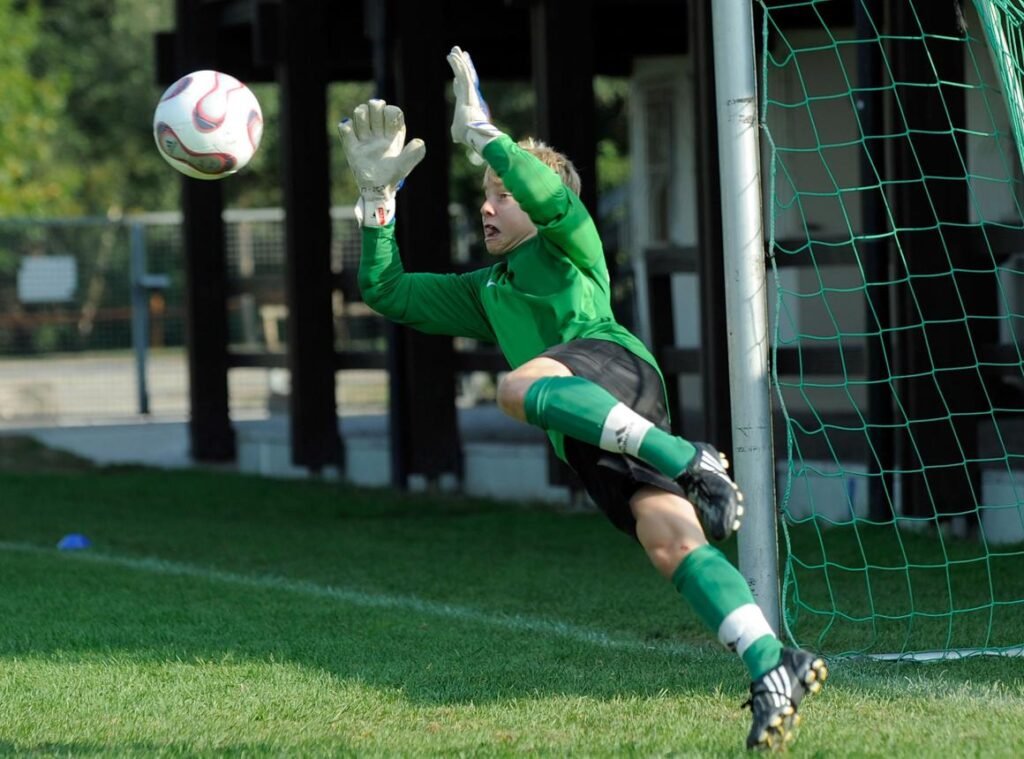
A football or soccer ball is used in the game to have fun. The ball is used to kick across the grass, play with and enjoy the game.
Browse New
Spending money is an important decision, so it’s worth exploring your options before you buy. Browse a variety of stores to compare products, prices and services, helping you find the right item at the right value. Whether you’re looking for sports equipment, books, games or hobby supplies, take the time to shop around and make an informed choice.
Football
A football or soccer ball is used in the game to have fun. The ball is used to kick across the grass, play with and enjoy the game.
Simply Tip: Create a wishlist for birthdays, save or earn pocket money by doing chores.
Test your friends & family's knowledge by flipping Simply Snapfacts
Inspire-Me Galleries
Challenge-Me Galleries
|
Where did surf lifesaving sport develop?
Surf lifesaving sport developed strongly in Australia in the early 1900s through beach rescue clubs and competitions.
Surf Lifesaving Sport
0

What is a key historical fact about Junior Aussie Rules?
Junior Aussie Rules has developed from earlier forms of sport, recreation or training into a recognised activity with its own skills, rules and community.
Junior Aussie Rules
0